


What is CELTA and why is it so important for teachers?
Living in the 21st century, many working professionals often think about how to secure their future: where to invest their time and effort, and which course or programme can deliver visible results in a relatively short period of time.
In connection with this, interest in international qualifications and certificates has increased significantly in recent years.
One of the most well-known and respected qualifications is CELTA (Certificate in Teaching English to Speakers of Other Languages).
One of the most well-known and respected qualifications is CELTA (Certificate in Teaching English to Speakers of Other Languages).
What is the CELTA certificate?
CELTA is a Cambridge qualification that certifies a teacher’s ability to teach English as a foreign language and is recognised by employers worldwide.
According to statistics, three out of four English teachers working abroad hold the CELTA certificate. To obtain this qualification, candidates must successfully complete the CELTA course.
CELTA is a Cambridge qualification that certifies a teacher’s ability to teach English as a foreign language and is recognised by employers worldwide.
According to statistics, three out of four English teachers working abroad hold the CELTA certificate. To obtain this qualification, candidates must successfully complete the CELTA course.
What is the CELTA course?
The CELTA course is based on the communicative approach to language teaching. It provides English teachers with solid theoretical foundations, practical teaching skills, and, crucially, the confidence required to teach adults effectively.
How does CELTA differ from other TEFL/TESOL programmes?
The key feature that sets CELTA apart from other methodology courses is the opportunity to teach real students.
All CELTA trainees deliver eight teaching practice lessons, and after each lesson, they receive detailed feedback from course tutors. Many participants note that they have never reflected on their teaching at such depth before. For many, it is only during CELTA when they truly begin to understand what the communicative approach is and why it is more effective than traditional teaching methods.
Most other methodological courses are largely theoretical and do not offer such extensive real-life teaching practice supported by professional feedback.
Advantages of the CELTA course
The main advantage of CELTA, as mentioned above, is its strong practical focus. The course is built around a communicative methodology that has been tested on tens of thousands of students over many years, as well as a clear principle of progression from simple to more complex tasks.
During the first two weeks, trainees receive maximum support from tutors while planning their lessons. However, by the third week, and especially the fourth, they are expected to demonstrate a much higher level of independent lesson planning.
Once participants have mastered basic lesson frameworks, they begin working with more advanced resources, such as authentic materials: unadapted articles, videos, and news content. This significantly boosts teachers’ confidence and takes their lesson planning and delivery to a higher professional level, which is often reflected in improved teaching grades.
Another major advantage of CELTA is the personal reflective journey each trainee goes through. The course encourages teachers to analyse their teaching before, during, and after the course.
The Electronic Portfolio is another distinctive feature that sets CELTA apart from purely theoretical TEFL and TESOL courses. It is your main professional document.
What is the CELTA Portfolio?
The CELTA Portfolio is your personal treasure box — it contains everything:
your lesson plans, tutors’ comments, observation notes from peer’s lessons, written assignments, your sleep deprivation, your tears and your joy, your Pride and Prejudice… and finally, your signed declaration that all the work was completed by you, not by Artificial Intelligence 😊
On a more serious note, the portfolio is the document reviewed by the Cambridge Assessment English Moderator before certificates are issued.
How and why has CELTA changed over the last five years?
CELTA gained particular popularity during the COVID-19 pandemic, when Cambridge along with the rest of the world, shifted to online learning.
Many teachers discovered new opportunities for professional development and financial stability, as online CELTA became widely available, enabling teachers to improve their qualifications and earn income without leaving home.
CELTA course formats
Today, CELTA is offered in several formats: online or offline, intensive or extensive.
CELTA course structure
Regardless of the format, the CELTA course requires 120 contact hours, as specified by Cambridge Assessment English. These hours include input sessions, lesson planning, teaching practice, lesson observations, assignment submission, self-evaluation, and feedback. Many graduates note that observing their peers’ lessons and discussing them afterwards was just as enriching as receiving feedback on their own teaching. Ongoing support from tutors often takes the form of Q&A discussions in dedicated course chats, while in-depth lesson feedback is delivered face to face (or online, if the course itself is online).
In addition to the 120 guided hours, trainees are expected to devote approximately the same amount of time to independent study. This includes reading methodology literature, completing four written assignments, and continuously analysing their own lessons (self-reflection & self-evaluation). The core aim of the CELTA is to train teachers to teach as effectively as possible in the shortest possible time.
Written assignments
All CELTA candidates must complete four written assignments. Submission deadlines are fixed and cannot be extended. This workload is entirely manageable if you approach the course consciously, with a clear understanding of the need to develop effective teaching skills and meet strict deadlines.
Who is CELTA for?
There is a common belief among teachers that CELTA is only suitable for beginners. Is this true? The answer is both yes and no. If you are entering teaching from another profession and have an Advanced C1 (CEFR) level of English, CELTA is definitely for you.
However, even experienced teachers benefit greatly from the course. CELTA allows them to refresh their knowledge of modern teaching methodologies and often rethink their approach to classroom management, teacher roles, error correction (or the deliberate absence of it), learner motivation and creating a supportive yet productive classroom atmosphere. As a result, teachers leave the course with increased professionalism and a clearer understanding of what they do in the classroom and why. Their teaching choices become more conscious and evidence-based, grounded in proven principles of second language acquisition.
Moreover, CELTA graduates become part of an international community of certified teachers, which positively affects professional confidence and opens up new employment and income opportunities.
How is CELTA assessed?
Many people mistakenly believe that CELTA ends with an exam.
In fact, the CELTA assessment is continuous. Trainees receive grades for their teaching practice and written assignments. All of this is compiled into the electronic portfolio and later submitted to Cambridge Assessment English for moderation and confirmation.
CELTA certificates
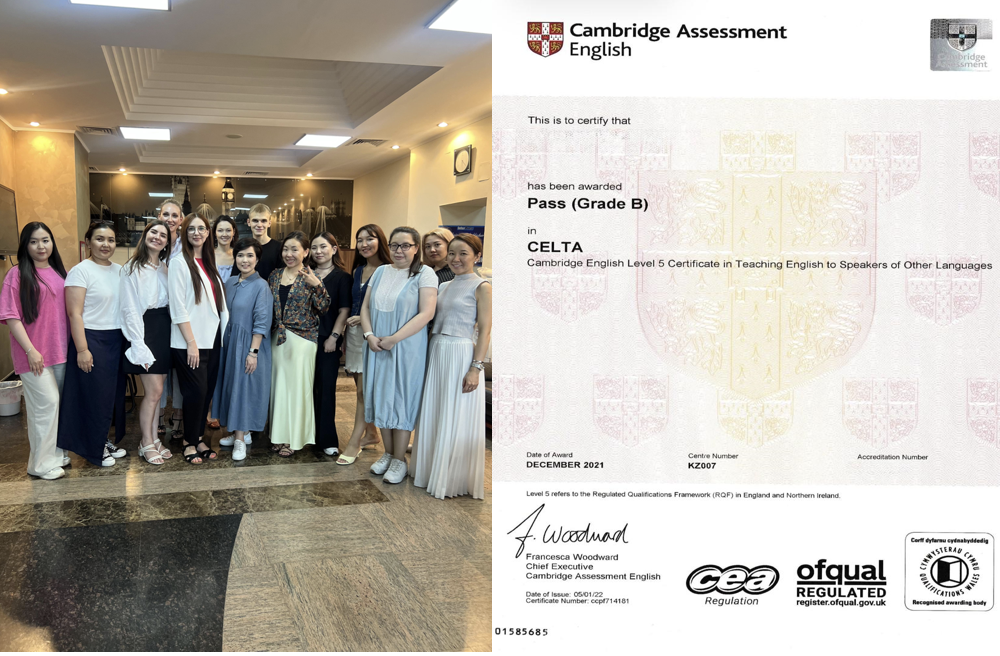
CELTA certificates are issued to all candidates who successfully complete the course. Immediately after finishing, participants receive Provisional grades. Once a Cambridge moderator has reviewed the portfolios in detail, the official CELTA certificates are issued.
In conclusion
CELTA is an internationally recognised qualification that can be obtained in a relatively short period of time, often without leaving your home country. It certifies your competence as a teacher of English and opens up new opportunities for employment and income worldwide.
The CELTA course is based on the communicative approach to language teaching. It provides English teachers with solid theoretical foundations, practical teaching skills, and, crucially, the confidence required to teach adults effectively.
How does CELTA differ from other TEFL/TESOL programmes?
The key feature that sets CELTA apart from other methodology courses is the opportunity to teach real students.
All CELTA trainees deliver eight teaching practice lessons, and after each lesson, they receive detailed feedback from course tutors. Many participants note that they have never reflected on their teaching at such depth before. For many, it is only during CELTA when they truly begin to understand what the communicative approach is and why it is more effective than traditional teaching methods.
Most other methodological courses are largely theoretical and do not offer such extensive real-life teaching practice supported by professional feedback.
Advantages of the CELTA course
The main advantage of CELTA, as mentioned above, is its strong practical focus. The course is built around a communicative methodology that has been tested on tens of thousands of students over many years, as well as a clear principle of progression from simple to more complex tasks.
During the first two weeks, trainees receive maximum support from tutors while planning their lessons. However, by the third week, and especially the fourth, they are expected to demonstrate a much higher level of independent lesson planning.
Once participants have mastered basic lesson frameworks, they begin working with more advanced resources, such as authentic materials: unadapted articles, videos, and news content. This significantly boosts teachers’ confidence and takes their lesson planning and delivery to a higher professional level, which is often reflected in improved teaching grades.
Another major advantage of CELTA is the personal reflective journey each trainee goes through. The course encourages teachers to analyse their teaching before, during, and after the course.
The Electronic Portfolio is another distinctive feature that sets CELTA apart from purely theoretical TEFL and TESOL courses. It is your main professional document.
What is the CELTA Portfolio?
The CELTA Portfolio is your personal treasure box — it contains everything:
your lesson plans, tutors’ comments, observation notes from peer’s lessons, written assignments, your sleep deprivation, your tears and your joy, your Pride and Prejudice… and finally, your signed declaration that all the work was completed by you, not by Artificial Intelligence 😊
On a more serious note, the portfolio is the document reviewed by the Cambridge Assessment English Moderator before certificates are issued.
How and why has CELTA changed over the last five years?
CELTA gained particular popularity during the COVID-19 pandemic, when Cambridge along with the rest of the world, shifted to online learning.
Many teachers discovered new opportunities for professional development and financial stability, as online CELTA became widely available, enabling teachers to improve their qualifications and earn income without leaving home.
CELTA course formats
Today, CELTA is offered in several formats: online or offline, intensive or extensive.
- Intensive offline CELTA: classes are held face-to-face on-site from Monday to Friday over four weeks.
- Intensive online CELTA: runs over four or five weeks, usually with one mid-week day off. Many experienced teachers are initially sceptical that it is possible to learn how to teach effectively in just one month. However, Cambridge statistics show around 12,000 CELTA candidates each year, approximately 4,000 of them do their CELTA with International House (IH).
- Extensive (part-time) CELTA: a longer format with classes two to three times a week over several months.
CELTA course structure
Regardless of the format, the CELTA course requires 120 contact hours, as specified by Cambridge Assessment English. These hours include input sessions, lesson planning, teaching practice, lesson observations, assignment submission, self-evaluation, and feedback. Many graduates note that observing their peers’ lessons and discussing them afterwards was just as enriching as receiving feedback on their own teaching. Ongoing support from tutors often takes the form of Q&A discussions in dedicated course chats, while in-depth lesson feedback is delivered face to face (or online, if the course itself is online).
In addition to the 120 guided hours, trainees are expected to devote approximately the same amount of time to independent study. This includes reading methodology literature, completing four written assignments, and continuously analysing their own lessons (self-reflection & self-evaluation). The core aim of the CELTA is to train teachers to teach as effectively as possible in the shortest possible time.
Written assignments
All CELTA candidates must complete four written assignments. Submission deadlines are fixed and cannot be extended. This workload is entirely manageable if you approach the course consciously, with a clear understanding of the need to develop effective teaching skills and meet strict deadlines.
Who is CELTA for?
There is a common belief among teachers that CELTA is only suitable for beginners. Is this true? The answer is both yes and no. If you are entering teaching from another profession and have an Advanced C1 (CEFR) level of English, CELTA is definitely for you.
However, even experienced teachers benefit greatly from the course. CELTA allows them to refresh their knowledge of modern teaching methodologies and often rethink their approach to classroom management, teacher roles, error correction (or the deliberate absence of it), learner motivation and creating a supportive yet productive classroom atmosphere. As a result, teachers leave the course with increased professionalism and a clearer understanding of what they do in the classroom and why. Their teaching choices become more conscious and evidence-based, grounded in proven principles of second language acquisition.
Moreover, CELTA graduates become part of an international community of certified teachers, which positively affects professional confidence and opens up new employment and income opportunities.
How is CELTA assessed?
Many people mistakenly believe that CELTA ends with an exam.
In fact, the CELTA assessment is continuous. Trainees receive grades for their teaching practice and written assignments. All of this is compiled into the electronic portfolio and later submitted to Cambridge Assessment English for moderation and confirmation.
CELTA certificates
CELTA certificates are issued to all candidates who successfully complete the course. Immediately after finishing, participants receive Provisional grades. Once a Cambridge moderator has reviewed the portfolios in detail, the official CELTA certificates are issued.
In conclusion
CELTA is an internationally recognised qualification that can be obtained in a relatively short period of time, often without leaving your home country. It certifies your competence as a teacher of English and opens up new opportunities for employment and income worldwide.

Ready to take your teaching to the next level?
Let’s start your teacher training journey today
Fill in the form and we’ll help you choose the right programme
Fill in the form and we’ll help you choose the right programme
Contacts
Marina Vyskrebentseva
Head of Teacher Training Department
Dinara Gabdullina
Director
E-mail:
Tamara Lozovaya
Teacher Training Department Admin (Almaty)
© IETC 2025. All Rights Reserved.
Private Policy
Diana Menshikova
Teacher Training Department Admin (Astana)


